By Eric Davis | Last Updated: July 5, 2026 | Drive-layout guidance below is based on machine mechanics and thousands of owner reports across both designs. No sponsored placements.
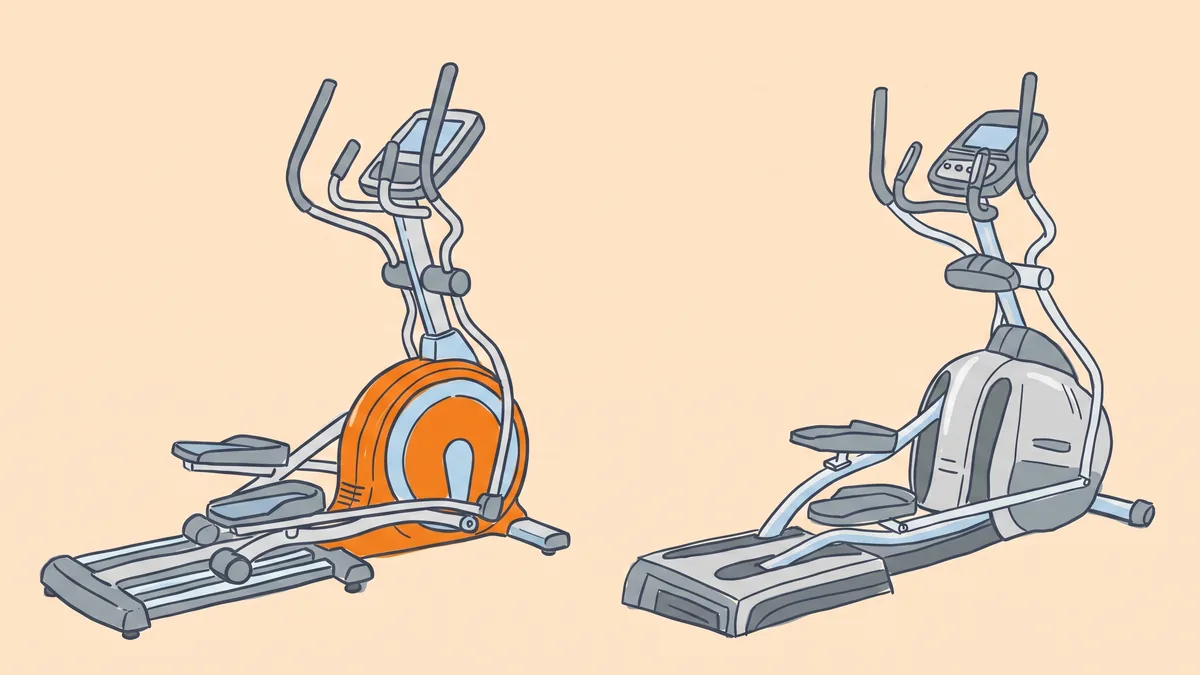
Every elliptical hides its personality in one place: where the flywheel lives. Front, rear, or center — that single design choice shapes how the stride feels, how much floor it takes, and what you’ll pay.
Quick answer: rear-drive ellipticals deliver the smoothest, flattest, most natural stride — they’re worth seeking out if stride feel is your priority. Front-drive machines are more compact and more affordable, which is why most budget and mid-range ellipticals use the design. Center-drive is the footprint specialist.
How the Three Drive Designs Work
Front-drive: the flywheel housing sits at the front, under the console, with your pedals on rails or arms behind it. The motion runs slightly elliptical-forward, with a touch more lean-in — some users describe it as a gentle stair-stepper flavor. Fewer moving parts keeps prices down.
Rear-drive: the flywheel sits behind you, and your feet travel a longer, flatter oval. This is the original elliptical layout — the design most people describe as “gliding” — and it typically comes with a longer frame and a higher price.
Center-drive: two smaller drive housings flank the pedals, keeping your feet close together, the posture upright, and the footprint the smallest of the three. Rarer, and usually mid-to-premium priced.
Front vs Rear vs Center: Side by Side
| Factor | Front-drive | Rear-drive | Center-drive |
|---|---|---|---|
| Stride feel | Slight forward lean, mild step flavor | Flattest, most natural glide | Upright, compact motion |
| Footprint | Shorter frame | Longest frame | Smallest overall |
| Typical price | $ (most budget machines) | $$–$$$ | $$–$$$ |
| Maintenance pattern | More rollers/rails to keep clean | Fewer wear points in owner reports | Middle ground |
| Best for | Budget buyers, smaller rooms | Stride purists, taller users, heavy use | Tight spaces, upright posture fans |
The Stride-Feel Difference (What Owners Actually Notice)
In owner reports, the pattern is consistent: people rarely complain about front-drive machines until they’ve tried a rear-drive one. The flatter rear-drive path feels closer to natural running form, while front-drive motion runs slightly more vertical.
Does it matter for results? No — calories don’t check the flywheel’s address. It matters for comfort over long sessions, and comfort decides whether long sessions happen.
One caveat that outranks drive layout entirely: stride length. A rear-drive machine with the wrong stride still loses to a front-drive machine with the right one. Check stride first, drive design second.
Which Drive Type Should You Buy?
Buy front-drive if budget leads the decision or the room is modest — nearly every strong machine in our budget guide uses this layout, and modern front-drives are genuinely good.
Buy rear-drive if you’re tall, plan long daily sessions, or tried an elliptical at a gym (usually rear-drive) and want that exact feel at home. Expect to shop the mid and premium tiers of the buyer’s guide.
Buy center-drive if the footprint is the whole battle — though check our compact guide first; several compact front-drives now match center-drive footprints for less money.
Frequently Asked Questions
Is front-drive or rear-drive elliptical better?
Rear-drive delivers the smoother, flatter stride most people prefer; front-drive delivers 80% of the experience for noticeably less money and floor space. Neither burns more calories — pick rear-drive for feel, front-drive for value.
Why are rear-drive ellipticals more expensive?
Longer frames, more material, and a drive geometry that costs more to build. The design also clusters in mid-range and premium lines, where everything else — flywheels, warranties, consoles — is upgraded too.
What drive type do gym ellipticals use?
Commercial machines are most often rear-drive or center-drive — smooth feel and durability justify the size and cost in a gym setting. It’s why home front-drive machines can feel different from what you’re used to at the gym.
Bottom Line
Drive design is a comfort decision, not a results decision. Rear-drive if the budget reaches and stride feel matters; front-drive for honest value; center-drive when inches decide. Get the stride length right and any of the three will carry you.
EllipticalHub is an Amazon Associates affiliate site — we may earn a commission on qualifying purchases at no extra cost to you.