
By Eric Davis | Last Updated: July 5, 2026 | This hub distills everything we research across EllipticalHub — live pricing data, verified specs, and thousands of owner reviews across every price tier. Recommendations link to our deepest guide for each situation. No sponsored placements.
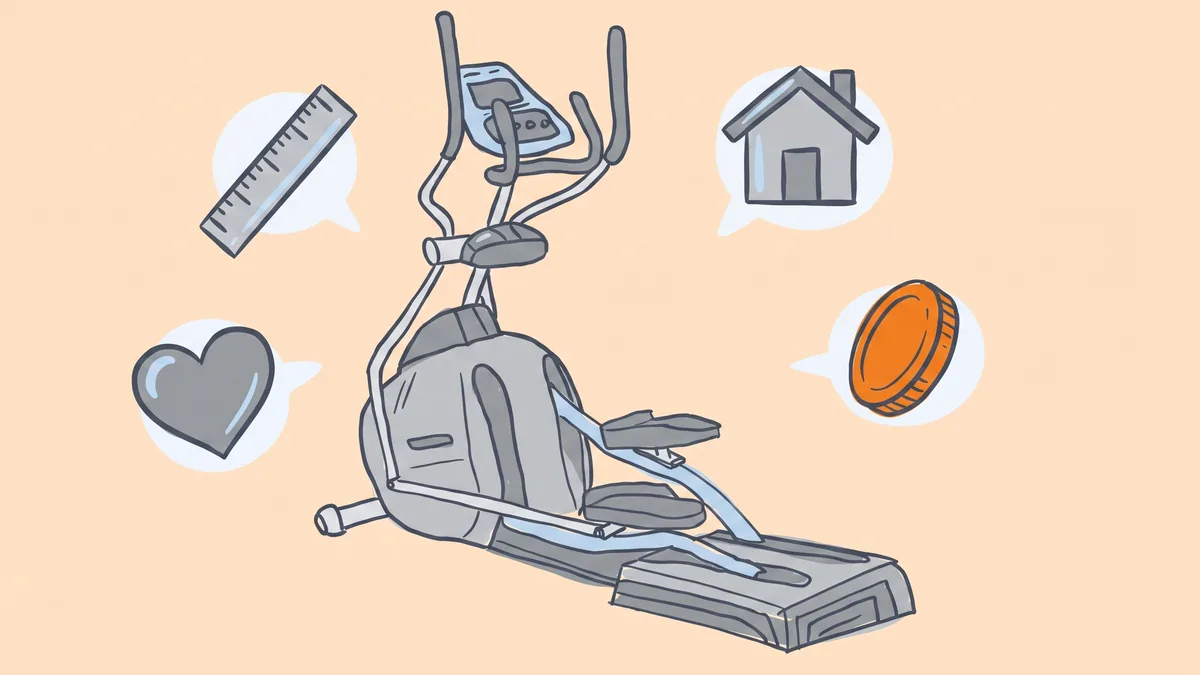
Buying a home elliptical in 2026 means facing three hundred lookalike machines, prices from $100 to $3,000, and spec sheets written to confuse you. This guide is the antidote — one page that routes you to the right machine for your body, budget, and floor plan.
Quick answer: the best home elliptical for most people is the Sunny Health & Fitness Smart Upright (about $297) on a budget, the Niceday Elliptical (about $600) in the mid-range, and the Sole E-series (from about $1,199) when you want a machine for the next decade. The full reasoning — and the right pick for your situation — is below.
Start Here: Find Your Guide in 10 Seconds
| Your situation | Go to |
|---|---|
| Budget under $400 | 10 best budget ellipticals |
| Budget under $500 | best under $500 |
| Budget $1,000–$2,500 | under $1,000 · under $2,500 |
| Bad knees / joint pain | seated (recumbent) ellipticals |
| Senior or balance concerns | best for seniors · senior workout guide |
| Tiny room or apartment | best compact ellipticals · folding shortlist |
| Two machines in one | elliptical-bike combos |
| Sole brand shopper | Sole lineup compared |
| Still elliptical vs …? | vs treadmill · vs bike · for weight loss |
The Best Home Elliptical at Every Budget
Three machines cover most homes. All three verified in stock with live pricing this week:
Under $400 — Sunny Health & Fitness Smart Upright
About $297 · 4.1 stars · 20,005 ratings. The most-validated budget elliptical on the market: magnetic resistance, app connectivity, and a support network smaller brands can’t match. Full context in the budget guide.
Check Sunny Smart Upright on Amazon
$500–$800 — Niceday Elliptical
About $600 · 4.4 stars · 2,943 ratings. The mid-range machine owners describe the same way over and over: quieter, smoother, and more stable than they expected, on a famously small footprint. Also our top pick for small spaces.
Check Niceday Elliptical on Amazon
$1,000+ — Sole E-Series
From about $1,199 · 4.2 stars. Commercial-heritage frames, lifetime frame warranties, and no subscription fees — the E25 is the entry point, the E95 the sweet spot for daily training. We compared every model in the Sole buyer’s guide.
Joint-Friendly / Seated — Teeter FreeStep LT3
About $999 · 4.6 stars · 985 ratings. The best home elliptical for anyone whose knees, hips, or balance vote no on standing cardio — fully seated, zero impact, and the machine physical therapy clinics choose. Full seated category: recumbent guide; senior-specific picks: seniors guide.
Check Teeter FreeStep LT3 on Amazon
Small Homes — YOSUDA Foldable 15″
About $350 · 4.5 stars. A true folding elliptical with a class-leading 15″ stride — the pick when the workout corner is also the everything corner. More options: compact guide and folding shortlist.
Check YOSUDA Foldable on Amazon
How to Choose a Home Elliptical (The 7 Factors That Matter)
1. Stride length — the comfort spec. Under 5’6″, 14″–16″ works; 5’6″–5’10″, aim 16″–18″; taller, 18″–20″ or adjustable. Get this wrong and no other feature saves the purchase. Full chart: stride length guide.
2. Resistance type. Magnetic (or ECB at the high end) is the modern standard — silent, smooth, nearly maintenance-free. Friction resistance is the past; skip it.
3. Flywheel weight. Heavier = smoother momentum. Budget machines run light (fine for steady cardio); 20 lb+ flywheels are where gym-feel begins.
4. Frame stability and weight rating. Buy 50 lbs of headroom over the heaviest user. A machine that wobbles is a machine that stops getting used.
5. Drive design. Front-drive (compact, affordable), rear-drive (smoothest stride), center-drive (smallest footprint). It shapes the feel more than any console feature.
6. Incline and programs. Power incline transforms muscle targeting — it’s the glute switch (muscle breakdown here). Common from ~$1,000; rare below.
7. The honest space check. Footprint plus ceiling (your height + pedal lift) plus handle sweep. Small-space solutions exist at every tier — see the compact guide.
Home Elliptical Types in 60 Seconds
| Type | Best for | Deep dive |
|---|---|---|
| Full-size (front/rear drive) | Primary home cardio, most users | This guide + budget tiers above |
| Compact | Apartments, small rooms | compact guide |
| Folding | Multi-use rooms | folding shortlist |
| Recumbent (seated) | Joint pain, rehab, seniors | seated guide |
| Under-desk | Desk workers, gentle daily movement | budget guide picks 9–10 |
| 2-in-1 combo | Shared households, flexibility | combo guide |
Home Elliptical Brands, Ranked Honestly
Sole — the durability benchmark. Commercial-heritage frames, lifetime frame warranties, free app. Our full Sole lineup comparison covers E25 through E98.
NordicTrack & ProForm — the interactive-training twins (same parent company). Strong hardware, big touchscreens, but the experience is built around the iFIT subscription (~$39/month) — budget for it or skip them. ProForm is the value wing; NordicTrack the premium one.
Schwinn — historically the mid-range value name; current elliptical availability is thin (the long-running 470 has effectively left the market). Buy only current-production models with active support.
Sunny Health & Fitness — the budget-category king. No machine under $400 is better validated. Headlines our budget guide.
Niceday — the mid-range disruptor: compact, hyper-quiet, and owner scores that embarrass bigger names at the price. We put the whole budget-brand wave under the microscope in Amazon’s budget elliptical brands, reviewed honestly.
Teeter & NuStep — the seated/rehab specialists. If joints or balance lead your decision, start with these two names.
High-end and light-commercial (Octane, Precor, Life Fitness, Sole E98) — gym-grade machines from $2,500 up. Worth it for daily multi-user households; overkill for most homes.
How We Choose Our Picks
Every recommendation on this page follows the same process: we pull live pricing and rating data across the category (98 machines in the last budget sweep alone), verify specs against current product listings, weigh rating volume over rating perfection (4.4 across 13,000 owners beats 4.8 across 40), and cut anything we can’t verify — including machines that quietly left the market, which we remove from these pages when we find them. No sponsored placements; affiliate links never decide a ranking.
Frequently Asked Questions
What is the best elliptical to buy for home use?
For most homes, the Sunny Health & Fitness Smart Upright (about $297) is the best value, the Niceday (about $600) the best mid-range, and the Sole E-series (from $1,199) the best long-term machine. Match the tier to how often you’ll realistically use it — daily exercisers should buy one tier above their instinct.
How much should I spend on a home elliptical?
$300–$400 buys reliable daily cardio for average-sized users. $600–$800 adds stability, quiet, and comfort. $1,200+ buys stride length, heavy flywheels, incline, and decade-long durability. Below $200, expect gentle-use machines only — honest expectations prevent most buyer’s remorse.
Is an elliptical good for weight loss at home?
Yes — it burns calories on par with most home cardio while being gentle enough to use daily, which is what actually drives weight loss. The full comparison: elliptical vs treadmill for weight loss.
Is 30 minutes on the elliptical a good daily workout?
Thirty daily minutes at moderate effort exceeds the widely used 150-minute weekly guideline and is a genuinely strong routine for heart health and weight management. Start lower if you’re new — consistency outranks duration. Setup and routines: gentle starter guide or the 30-day plan in the budget guide.
What is the best elliptical machine for seniors at home?
The Teeter FreeStep LT3 (seated, zero balance demand) is the safest choice for most seniors; among standing machines, the Sole E25’s heavy stable frame leads. Low step-up height, stationary handholds, and easy resistance matter more than any console feature — full checks in our seniors guide.
What are the best elliptical settings for weight loss?
Moderate resistance you can sustain for 20–30 minutes beats maximal settings you abandon in five — add brief higher-intensity intervals once the base is comfortable, and use incline (where available) to raise burn without impact. Full strategy: elliptical for weight loss.
Are high-end elliptical machines worth it for home use?
Above roughly $2,500 you’re buying commercial-grade frames, long adjustable strides, and multi-user durability. Worth it for daily training households and tall users; for everyone else, the $300–$1,200 tiers on this page deliver the same health outcomes for a fraction of the spend.
What changed in home ellipticals for 2026?
Three shifts: budget machines under $400 became genuinely good (magnetic resistance is now standard), app connectivity replaced built-in screens at the low end, and several long-running mid-range models (Schwinn 470 among them) left the market — check availability before trusting older guides.
The Bottom Line
The best home elliptical is the one matched to your body (stride), your home (footprint), and your honesty about budget and use. Use the routing table at the top, follow the tier guides, and buy once instead of twice.
Your home already has room for this. Somewhere between the sofa and the window, there’s a healthier year waiting to be installed.
EllipticalHub is an Amazon Associates affiliate site — we may earn a commission on qualifying purchases at no extra cost to you. Prices verified July 5, 2026 and subject to change.



![Elliptical Resistance and Incline Settings: How to Optimize for Maximum Results [2026]](https://www.ellipticalhub.com/wp-content/uploads/2023/10/ellipticalhub-default-imgae-336x220.jpg)


