By Eric Davis | Last Updated: July 5, 2026 | We compare machine mechanics and published exercise research, plus hundreds of owner reports on which machine people actually keep using. No sponsored placements.
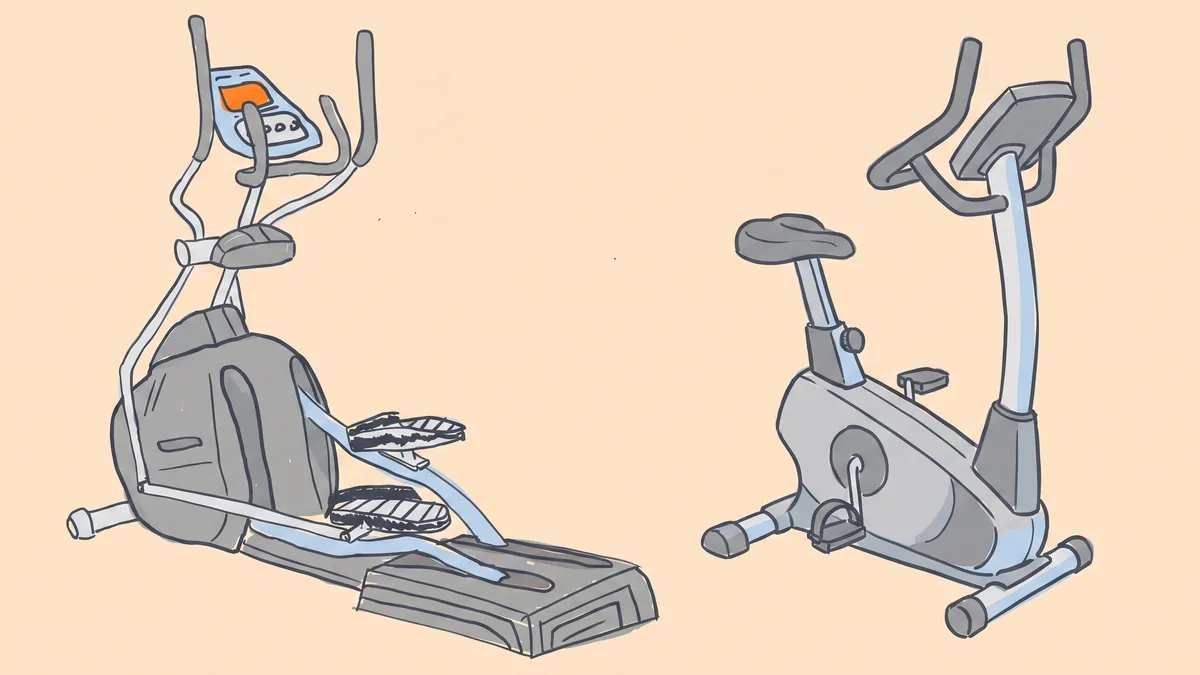
Choosing between an elliptical machine and a stationary bike is one of the most common decisions home gym buyers face. Both deliver effective low-impact cardio workouts, but they engage your body in very different ways. Whether you’re recovering from an injury, trying to lose weight, or building endurance, understanding how each machine works can help you invest in the right equipment for your goals.
In this comprehensive elliptical vs. stationary bike comparison, we break down the key differences in calorie burn, muscle engagement, joint impact, and overall value so you can make a confident decision.
Elliptical vs. Stationary Bike: Key Differences at a Glance
Before diving into the details, here is a quick summary of how these two machines compare across the factors that matter most:
- Calorie burn: Ellipticals generally burn 10-15% more calories per session because they recruit both upper and lower body muscles simultaneously.
- Muscle engagement: Ellipticals work the glutes, hamstrings, quads, chest, back, and arms. Stationary bikes primarily target the quads, hamstrings, and calves.
- Joint impact: Both are low-impact, but the elliptical’s gliding motion places virtually zero stress on the knees and hips.
- Space and cost: Stationary bikes have a smaller footprint and tend to cost less at the entry level.
- Learning curve: Bikes feel natural from day one; ellipticals take a session or two to master the rhythm.
Calorie Burn: Elliptical vs. Stationary Bike
One of the biggest questions people ask is which machine burns more calories. According to Harvard Health, a 155-pound person burns roughly 324 calories in 30 minutes on an elliptical at moderate intensity, compared to about 252 calories on a stationary bike at the same effort level.
The elliptical’s calorie advantage comes from its full-body design. When you push and pull the handlebars while striding, you engage your chest, back, shoulders, and arms in addition to your legs. This recruits more total muscle mass, which drives up your heart rate and energy expenditure without requiring you to pedal any harder.
That said, a stationary bike can close the gap with high-intensity interval training (HIIT). Short bursts of all-out effort on a spin bike can push your calorie burn above 400 in 30 minutes, though sustaining that intensity takes serious fitness. For most people exercising at a moderate pace, the elliptical delivers more calorie burn per minute of effort.
Muscles Worked: Which Machine Gives a Better Workout?
If your goal is a complete workout in less time, the elliptical has a clear edge. The muscles worked on an elliptical include the quadriceps, hamstrings, glutes, calves, chest, back, biceps, and triceps. Pedaling forward emphasizes the quads and calves, while reversing the stride shifts the load to the hamstrings and glutes.
A stationary bike primarily targets the lower body. The quads do most of the work during the downstroke, the hamstrings assist during the upstroke, and the calves stabilize your pedal stroke. Your core stays moderately engaged to keep you upright, but your upper body gets very little stimulus.
For people who want upper-body engagement without adding a separate strength routine, the elliptical is the stronger choice. If you already lift weights and simply need dedicated leg cardio, the bike’s focused lower-body emphasis may actually complement your program better.
Joint Impact and Injury Considerations
Both machines are considered low-impact, making them popular among people with knee pain, arthritis, or those recovering from surgery. However, there are subtle differences worth noting.
The elliptical is a true zero-impact machine. Your feet never leave the pedals, so there is no ground-contact jarring at all. The smooth, oval-shaped stride mimics walking or running without the repetitive shock. This makes it an excellent choice for seniors and anyone with joint sensitivities.
Stationary bikes are also gentle on the joints, but the repetitive circular pedaling motion can sometimes aggravate the knees, particularly if the seat height is set incorrectly. A seat that is too low forces the knee to flex past its comfortable range at the top of each pedal stroke, which can cause discomfort over time.
If you are dealing with an active knee injury or severe arthritis, a recumbent elliptical or recumbent bike may be worth considering, as both reduce stress on the lower back as well.
Space Requirements and Footprint
Space is a real consideration for home gym setups. A standard elliptical machine requires roughly 6 to 7 feet of length and 2 to 3 feet of width, plus ceiling clearance since the pedals elevate you several inches. If space is tight, a folding elliptical can cut the footprint in half when stored.
Stationary bikes are more compact. An upright bike typically needs about 4 feet of length and 2 feet of width, making it easier to fit into a bedroom corner, apartment, or small home office. Some under-desk models are even more compact for use while working.
If your workout space is limited, the stationary bike wins on footprint alone. But if you have a dedicated workout area, the elliptical’s extra space requirement is a minor tradeoff for the full-body workout it provides.
Cost Comparison: What to Expect
Entry-level stationary bikes start around $150 to $300 for a basic upright model, making them one of the most affordable home cardio options. Quality ellipticals typically start around $300 to $500 for a budget-friendly model, with mid-range machines in the $500 to $1,000 range.
At the premium end, both machines can reach $2,000 or more. High-end spin bikes with screens and streaming classes cost $1,500 to $2,500, while premium ellipticals from brands like Sole and NordicTrack fall in a similar range.
Dollar for dollar, a stationary bike gives you a lower barrier to entry. But consider the value per workout: because the elliptical works more muscle groups simultaneously, you may need fewer supplemental exercises, potentially saving money on additional equipment.
Which Is Better for Weight Loss?
For pure weight loss, the elliptical has a slight edge because of its higher calorie burn and full-body muscle engagement. More muscles working means a higher metabolic rate both during and after your workout through the afterburn effect.
However, consistency matters more than the machine itself. If you enjoy cycling and will ride 5 days a week but dread the elliptical, the bike will deliver better results simply because you will actually use it. The best cardio machine for weight loss is always the one you stick with long term.
A practical approach for many people is to use both machines on alternating days. This prevents repetitive-strain boredom, works different muscle groups, and keeps your body adapting. If you can only buy one, choose the machine you look forward to using.
Elliptical vs. Stationary Bike: The Verdict
Choose the elliptical if: You want a full-body workout, need maximum calorie burn per session, have joint concerns, or prefer a single machine that replaces both cardio and light upper-body work. Check out our guide to the basics of elliptical training to get started.
Choose the stationary bike if: You are on a tight budget, have limited space, enjoy cycling, already do upper-body strength training separately, or prefer a machine with zero learning curve.
Both machines are excellent investments in your health. The right choice depends on your fitness goals, available space, budget, and personal preferences. No matter which you pick, consistent use is what delivers results.
Frequently Asked Questions
Is an elliptical better than a stationary bike for belly fat?
No machine can spot-reduce belly fat. However, the elliptical burns more total calories per session, which contributes to a greater overall calorie deficit. Combined with a balanced diet, the elliptical’s higher energy expenditure may help you lose body fat, including belly fat, slightly faster than a stationary bike at the same effort level.
Can I use an elliptical every day?
Yes, most healthy adults can use an elliptical daily because it is a zero-impact activity. Start with 20 to 30 minutes at moderate intensity and increase duration gradually. If you are brand new to exercise, alternating days with rest or light walking helps your body adapt. Learn more in our guide on how often you should use an elliptical.
Is a stationary bike or elliptical better for bad knees?
Both are gentle on the knees, but the elliptical is generally the safer choice for knee problems. The elliptical’s gliding motion eliminates the repetitive flexion cycle that can irritate the knee joint on a bike. If you choose a bike, make sure the seat height is adjusted so your knee never fully extends or over-flexes during pedaling.
How long should I use an elliptical or bike to see results?
Most people notice improved cardiovascular fitness within 2 to 4 weeks of consistent 30-minute sessions, 3 to 5 times per week. Visible weight loss typically takes 4 to 8 weeks when combined with a moderate calorie deficit. Regardless of which machine you choose, progressive overload through gradually increasing resistance or duration is the key to continued improvement.
Related comparisons: elliptical vs treadmill · elliptical vs treadmill for weight loss · muscles the elliptical works · seated (recumbent) ellipticals
Choosing a machine? Start with our home elliptical buyer’s guide.